
Stock Epinephrine IN SCHOOLS TOOLKIT
Epinephrine Medication
Go to: Stock Epinephrine Toolkit
Understanding How Epinephrine Works
The Allergy & Asthma Network provides valuable information about epinephrine.
An anaphylactic reaction causes life-threatening symptoms. If not quickly treated, these symptoms can lead to anaphylactic shock and death. When epinephrine is administered, it triggers a sudden burst of adrenaline to multiple areas of the body at the same time. It works by reducing throat swelling. It opens the airways. It helps maintain heart function and blood pressure. Also, as epinephrine can help reduce hives and itching. Epinephrine will also prevent a further release of histamine, the chemical that responds to allergens and ushers in symptoms.
Epinephrine use in anaphylaxis reduces or reverses these severe symptoms immediately, but the full effect may take 5-10 minutes. Epinephrine begins wearing off within 20-30 minutes. Therefore, 911 must be called because additional emergency care may be needed after administering epinephrine.
Epinephrine auto injectors or nasal atomizers are a prescribed medication and are single dose. This means once given, the delivery system is empty and cannot be used again.
Epinephrine is so effective it reverses the life-threatening allergic reaction, but it is not without potential side effects. A true allergy to epinephrine is extremely rare. Side effects may include:
- Trouble breathing
- Fast, irregular, or pounding heartbeat
- Pale skin
- Sweating
- Nausea and/or vomiting
- Dizziness
- Weakness or tremors
- Headache
- Anxiety or restlessness
Most side effects will resolve in about 30 minutes and fully disappear within a few hours. This is another reason 911 must be called if administered.
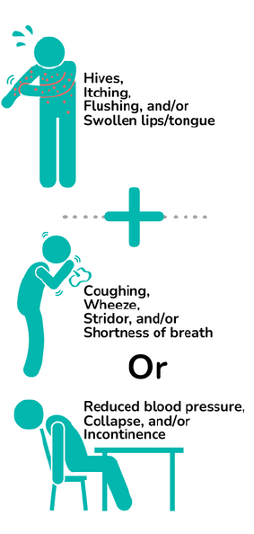
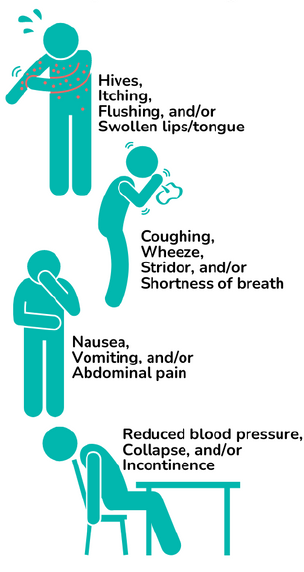
Recognizing Signs and Symptoms of Anaphylaxis
Anaphylaxis is defined in three different ways:
| Symptom | Graphic |
|---|---|
A sudden onset of skin symptoms along with respiratory OR circulatory symptoms, including:
|  |
Sudden onset of a combination of two body system symptoms, including:
|  |
| Exposure to allergen AND a drop in blood pressure. | 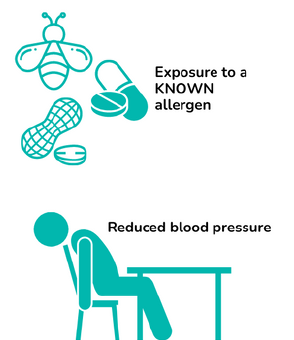 |
Adapted from American Academy of Allergy, Asthma, & Immunology (AAAAI)
Epinephrine is so effective it reverses the life-threatening allergic reaction, but it is not without potential side effects. A true allergy to epinephrine is extremely rare. Side effects may include:
- Trouble breathing
- Fast, irregular, or pounding heartbeat
- Pale skin
- Sweating
- Nausea and/or vomiting
- Dizziness
- Weakness or tremors
- Headache
- Anxiety or restlessness
Most side effects will resolve in about 30 minutes and fully disappear within a few hours. This is another reason 911 must be called if administered.
Resources for Obtaining Epinephrine Delivery Systems
Key Considerations
Before obtaining epinephrine delivery systems for an undesignated stock epinephrine program, the school should consider several key factors.
- What type of epinephrine delivery system(s) will the school obtain to stock?
- Auto-injector (which brand?) or nasal spray
- Strength of epinephrine to be used
- Initial and repeat dosing during the medical emergency
- Consider the cost of various available forms of epinephrine delivery systems. Cost varies by the type of epinephrine delivery system being obtained.
- Limited quantities of free epinephrine delivery systems may be offered by various organizations
- If the school decides to use “free” resources for supply, will the source be able to meet the quantity needs of the school?
- What are the limitations associated with a “free” supply. The type of free epinephrine delivery system offered may not be the type schools districts prefer to keep in stock.
- How many locations need to have the medication available?
- How many are needed at each location, including back-up medication?
- How will stock epinephrine delivery systems be stored at each location, i.e., with AED or other first responder kits.
- What is the safety or safety concerns associated with various available forms related to storage and accessibility. Consider ease of use by trained staff. Consider staff confusion or ability to remember medication administration steps if choosing to stock multiple types of epinephrine delivery systems. This is an emergency which requires the medication to be used quickly and correctly. Staff must feel comfortable and confident in using the medication.
- Determine a procedure for keeping track of the supply of stock epinephrine delivery systems, expiration dates, and replacement when needed.
- Determine how you will dispose of “expired” medication.
- The epinephrine delivery device used in an emergency response should be sent with EMS so that the medical team knows what type of epinephrine was used and how much was given.
Ordering Resources
EpiPen4Schools Program
The EpiPen4Schools Program is a program administered by Mylan, the manufacturer that makes EpiPen. Through this program, schools may apply for up to 4 EpiPen autoinjectors in the form of two EpiPen 2-PAK® cartons, two EpiPen JR 2-PAK® cartons, or one 2-PAK® of each kind. The school must submit a valid prescription from a licensed prescriber to qualify for this program. The MDH standing order for distribution would meet all requirements to obtain this medication.
Please note: Shipping delays may occur. If a school has expired stock or is in dire need of medication, schools should consider alternative access points for epinephrine.
MDH does not provide technical support for this program. School administrators should work directly with the EpiPen4Schools program for questions regarding application or order status. The MDH standing order for distribution would meet all requirements to obtain this medication.
neffyinSchools Program
The neffyinSchools Program is a program administered by ARS Pharma, the manufacturer that makes neffy®. Through this program, schools may apply for two free boxes of neffy® (equivalent to four free devices). Schools will be eligible for free replenishment if the product is used or when it expires.
Please note: As a condition of participation in the neffyinSchools program, districts/schools are required to utilize the School Health Compliance Management System. If your district or school is not already enrolled, it will be required to subscribe to the platform. A $25 annual subscription fee per school (districts of five or more schools) or $50 per school (districts with one to four schools) will be billed directly by the neffyinSchools program to your school district.
Schools can expect to receive their request 2-4 weeks from the submission of a COMPLETE application.
MDH does not provide technical support for this program. School administrators should work directly with the neffyinSchools program for questions regarding application or order status (connect@schoolhealth.com). The MDH standing order for distribution would meet all requirements to obtain this medication.
Access through Local Pharmacy or School Health Supplier
Schools may purchase epinephrine delivery systems directly from a school health supplier or pharmacy. Schools will need a valid prescription or standing order for distribution from a licensed prescriber to purchase the medication. The MDH standing order for distribution would meet all requirements to obtain this medication.