
2026 Public Health Laboratory Newsroom
Minn. Newborn Screening Information Translated into 12 Languages
Nearly every baby born in Minnesota is screened for the more than 60 health conditions listed in the Minnesota Newborn Screening Panel. Many of these conditions, such as congenital hypothyroidism and galactosemia, can cause severe impairments and even death if not detected early. By analyzing a newborn’s blood, hearing, and oxygen levels, health care providers and the Minnesota Newborn Screening Program identify signs that can lead to diagnoses well before babies experience any symptoms.
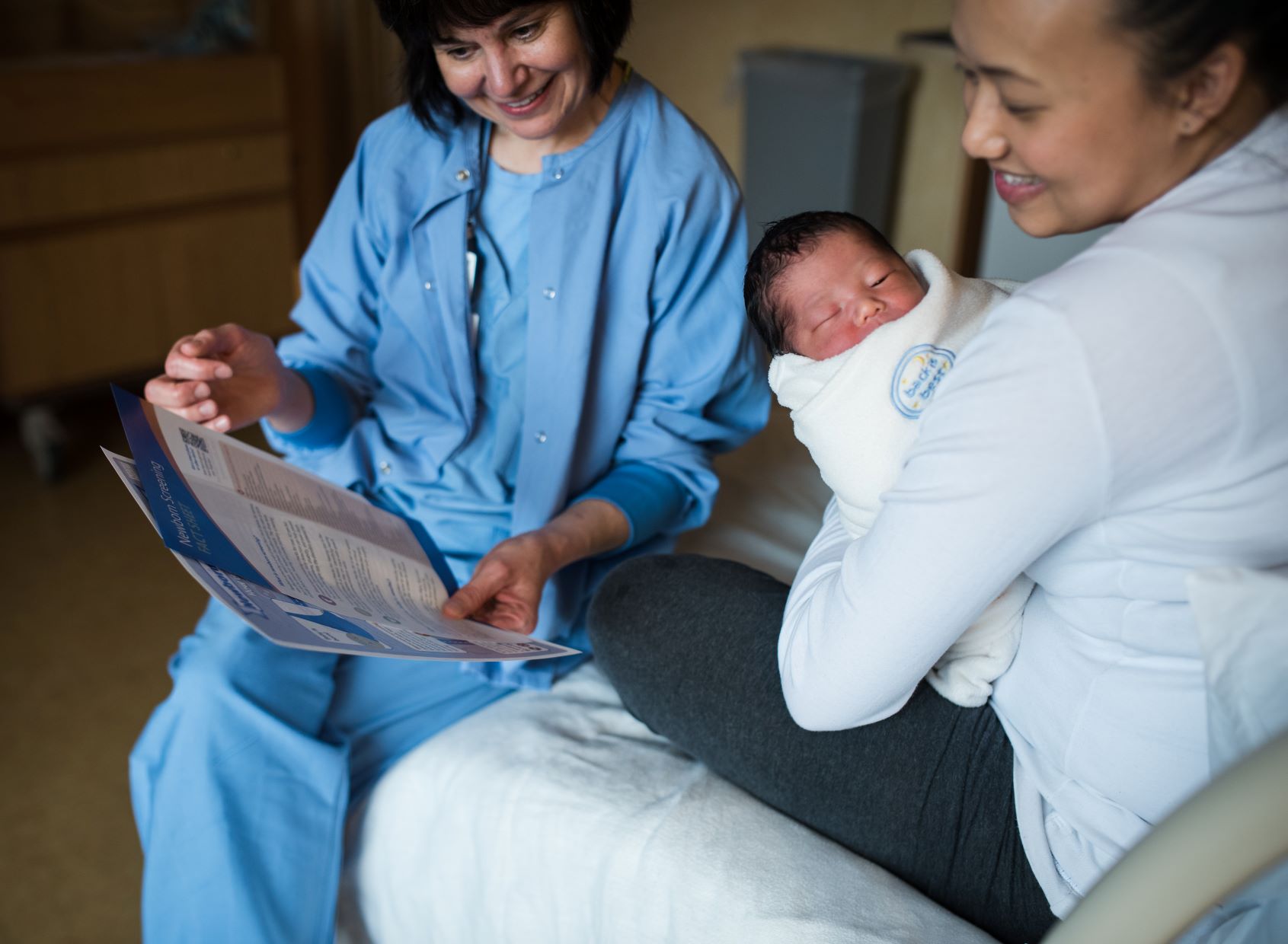 It is very important that parents understand how newborn screening can help their newborns stay healthy. Along with information for families on the Minnesota Newborn Screening website, the program distributes educational materials and forms to hospitals, clinics, and midwives. The health care professionals then give the materials to parents. If a blood spot screening test yields a positive or borderline result, the baby’s family is given the relevant blood spot disorder fact sheet.
Choosing the languages for newborn screening materials
Some basic informational sheets about newborn screening have long been available in the most commonly used languages in Minnesota:
- English
- Hmong (spoken primarily in southwestern China, northern Vietnam, Thailand, and Laos)
- Karen (spoken primarily in southeastern Myanmar and western Thailand)
- Russian
- Somali (spoken primarily in Somalia and Ethiopia)
- Spanish
However, many young Minnesotan families either do not speak these languages fluently or do not feel most comfortable with them. The Minnesota Newborn Screening Program has created versions of these materials in the following languages, reflecting the changing demographics in the state:
- Amharic (spoken primarily in Ethiopia)
- Arabic (spoken throughout the Middle East and northern Africa)
- Dari (spoken primarily in Afghanistan)
- Hindi (spoken primarily in India, transliterated into the Latin-script alphabet used in English)
- Oromo (spoken primarily in Ethiopia and Kenya)
- Pashto (spoken primarily in northwestern Pakistan and southern and eastern Afghanistan)
- Ukrainian
In choosing which languages to translate documents into, a main factor is whether they are first languages for families of childbearing years who have recently arrived in Minnesota. For example, many young people are fleeing the war in Ukraine, including some pregnant women.
Another factor is that some health conditions affect certain populations more than others. Most of the conditions screened for by the Minnesota Newborn Screening Program are heritable, meaning that they are passed on to babies through their parents’ genes. For example, some hemoglobin disorders like sickle cell disease are more common among people of African descent. This makes it especially important to translate the relevant fact sheets about hemoglobin disorders into Amharic, Arabic, Oromo, and Somali.
Working toward health equity
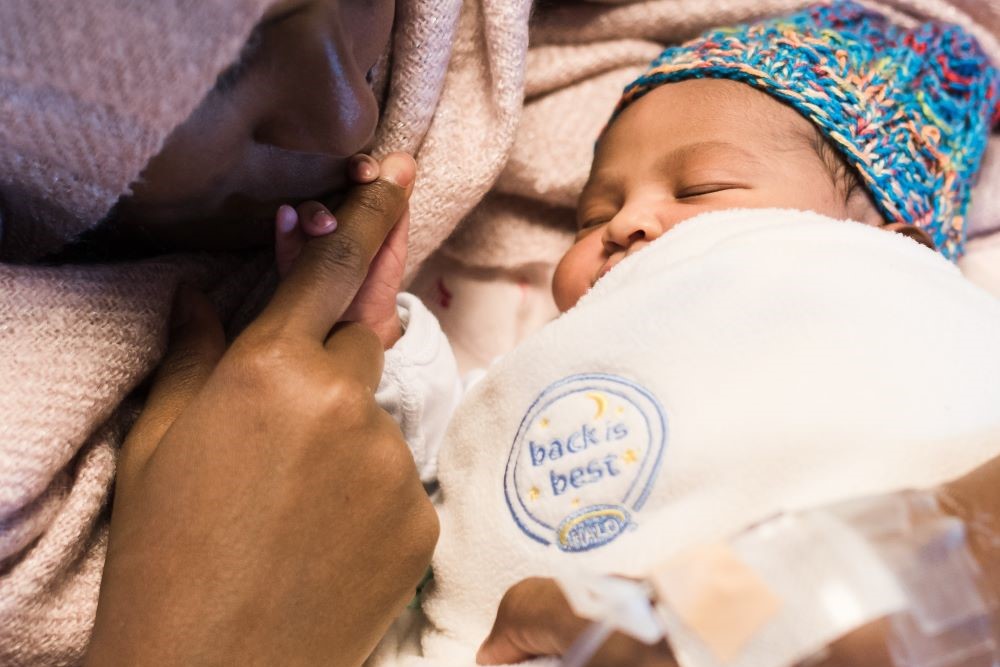 The overarching goal of this project is to further health equity. Health equity involves addressing avoidable inequalities to eliminate health and health care disparities. While parents of newborns may be able to use services to translate newborn screening forms and fact sheets into their first languages, that is not an equitable solution. It is much more likely that parents will fully understand the information if they receive it in their first languages. The Minnesota Newborn Screening Program is devoted to ensuring every family understands how newborn screening can help their babies thrive.