Syphilis is a common treatable sexually transmitted infection (STI).
If you have syphilis during your pregnancy, it can be passed to your baby and cause serious health problems.
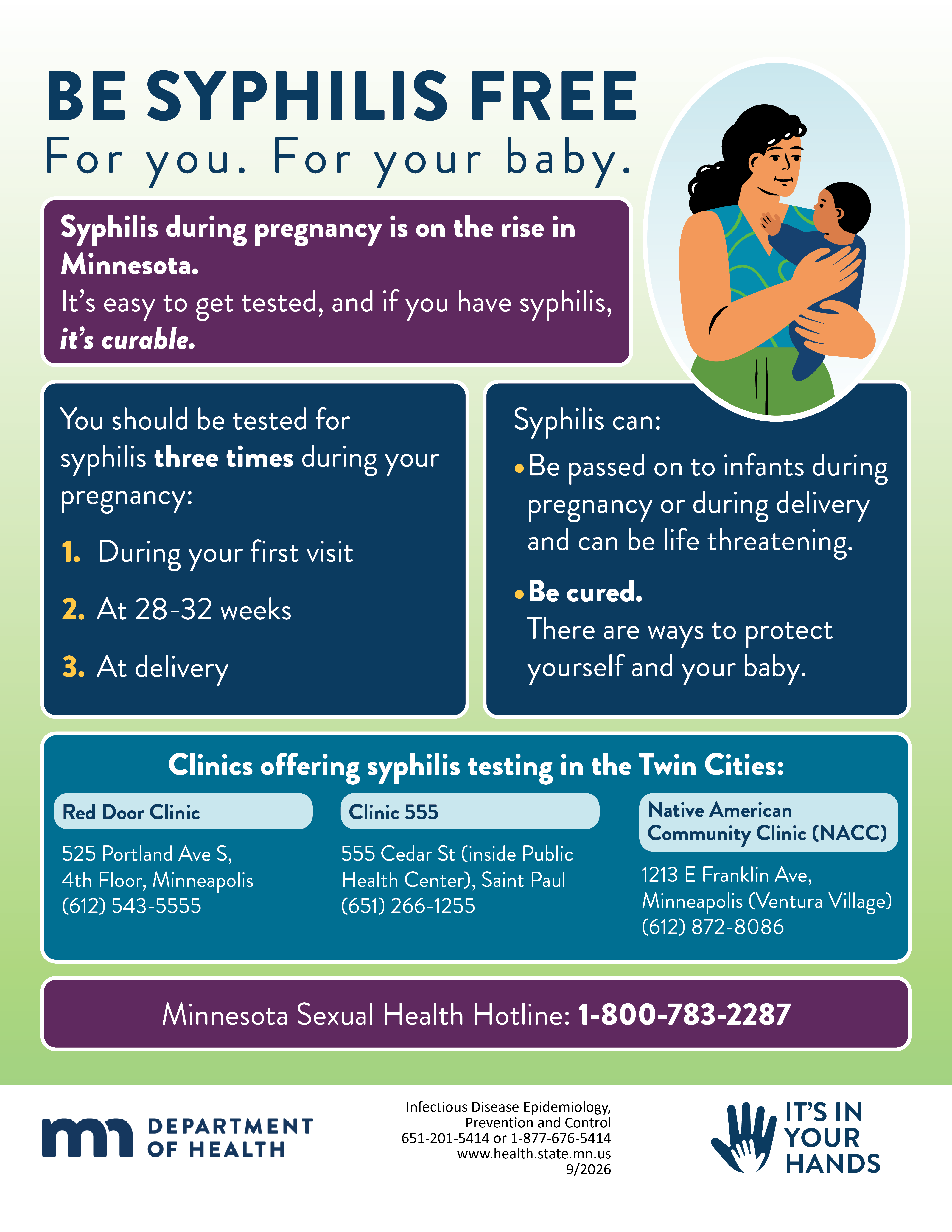
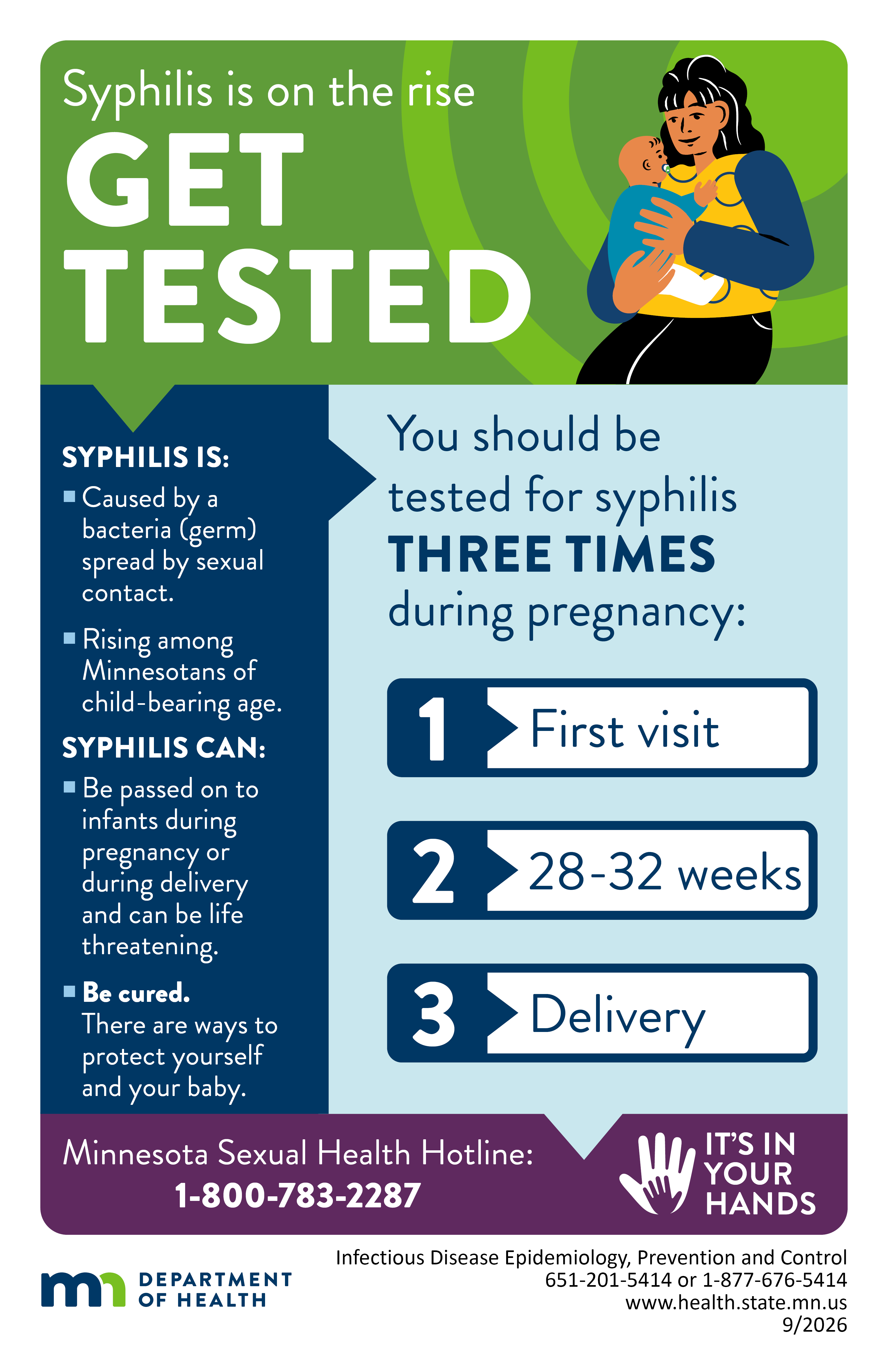
Get tested for syphilis three times during your pregnancy to make sure you and your baby are safe.
What is congenital syphilis?
Syphilis is an STI that can have very serious complications when left untreated, but it is simple to cure with the right treatment.
Congenital syphilis occurs when untreated syphilis is passed to the baby during pregnancy, which can cause serious health problems.
Congenital syphilis can cause:
Miscarriage
Stillbirth
Premature birth
Brain/nerve problems, including blindness and deafness
How can I prevent congenital syphilis?
Get tested for syphilis three times each pregnancy:
At first prenatal encounter (ideally in the first trimester)
Early in the third trimester (28-32 weeks)
At delivery
If you are pregnant and have syphilis, you and your sex partner should receive antibiotic treatment right away. While syphilis is curable, it is possible to get reinfected if your partner isn't also treated.
If you have concerns with possible reinfection, seek medical attention or connect with the MDH STI/HIV Partner Services Program.
CDC: Get Tested Search by zip code to find free STI testing, including syphilis, near you.
Treatment
Syphilis is easily curable at all stages with antibiotics. Babies born with congenital syphilis need to be treated right after birth.
Treatment cures your current infection, but it does not protect you from getting syphilis again in the future. It’s important your sex partner also receives treatment too.